Filipino Wedding Traditions: Cord, Veil, Arras and Money Dance
A clear guide to Filipino wedding traditions: pamamanhikan, principal sponsors, the veil and cord, arras coins, the money dance, and BC styling.

Mei-Lin Chen
East Asian Weddings Editor
12 min read
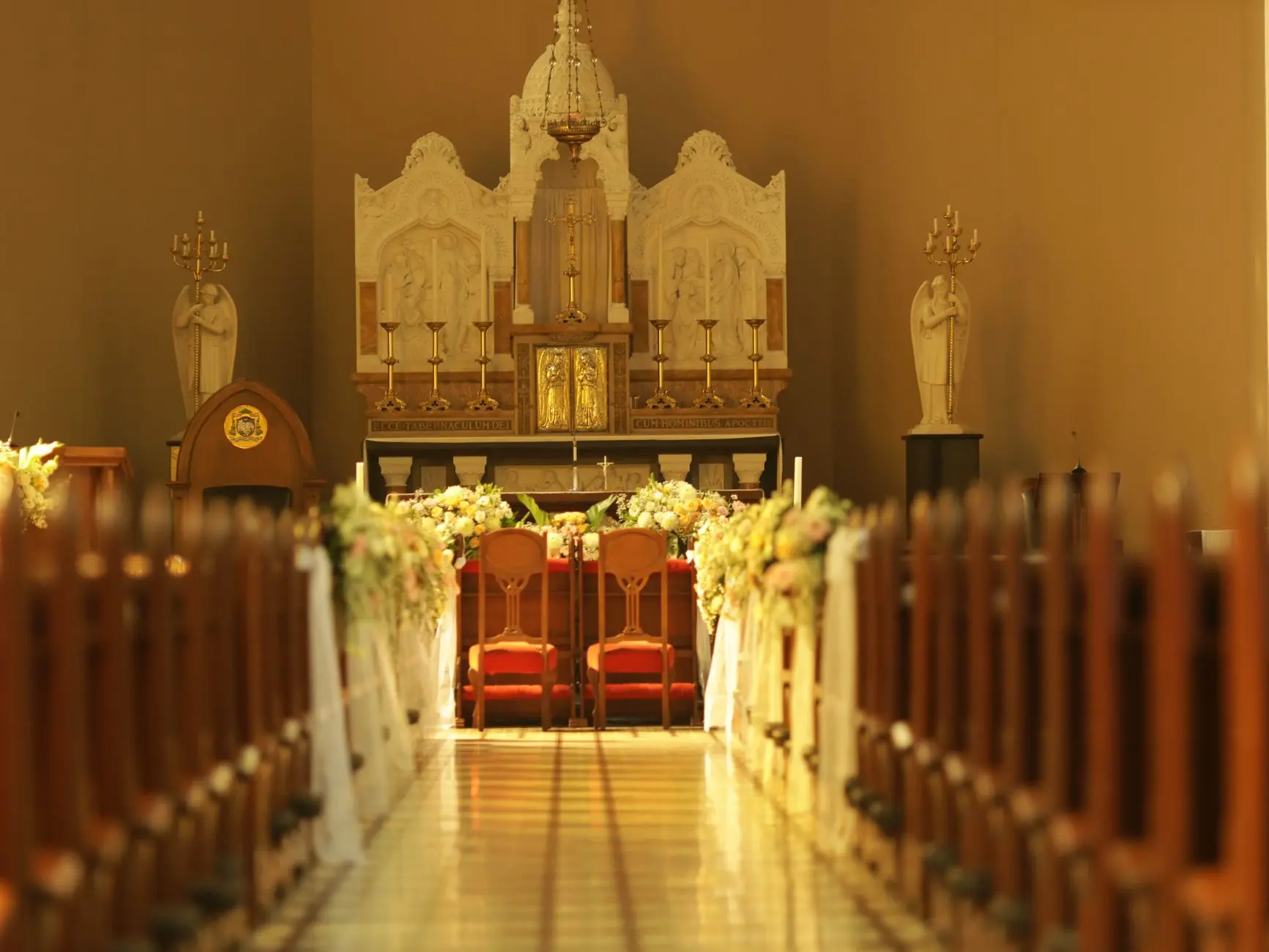
Filipino wedding traditions bring together a formal family visit, a set of symbolic rites performed by chosen sponsors, and a reception built for dancing, feeding a crowd and honouring elders. A Filipino wedding rarely rests on just the couple. It is shaped by godparents, aunties, neighbours and customs that reach back generations, many of them rooted in Catholic practice that arrived during Spanish colonial rule and then wove itself into local family life.
Most Filipino weddings today, in the Philippines and across the diaspora, hold onto a handful of recognizable rites: the pamamanhikan visit before the wedding, the principal sponsors who stand with the couple at the altar, the candle, veil and cord ceremonies performed during the service, the arras (coins) exchanged as a pledge, and the money dance at the reception. Families vary in how closely they follow each one, and denomination, region and generation all shape the details, but these markers are what most guests expect to see.
In British Columbia, Filipino-Canadian communities in Metro Vancouver, Surrey, the Fraser Valley and the Okanagan carry these customs forward in churches, community halls, backyards and banquet venues, often folding them into a day that also looks like any other contemporary BC wedding: a hired photographer, a seated dinner, a DJ and a dance floor. This guide walks through each tradition, who is involved, and how families in BC are keeping the rites intact while building a reception that fits their venue and their guest list.
What is the pamamanhikan?
The pamamanhikan is a formal visit, traditionally made by the groom and his parents to the home of the bride's family, to ask for her hand and discuss the wedding. The word comes from the Tagalog root for climbing stairs, a reference to the groom literally climbing the steps to the bride's family home to make his intentions known in front of her parents and elders.
Historically, this visit happened before any public engagement announcement, and it could involve genuine negotiation: a dowry of sorts, a discussion of who would host the wedding, and an agreement on timing. Today, many couples are already engaged, often with a proposal that happened privately, so the pamamanhikan has shifted into more of a ceremonial blessing and planning meeting between the two families. It usually includes a shared meal, a formal introduction of parents and siblings, and a conversation about the wedding date, the venue and who will take on which costs.
In BC, families sometimes combine the pamamanhikan with an engagement party at home, inviting extended relatives and close family friends rather than holding it as a private, two-family affair. Others keep it small and quiet, closer to the traditional format, especially when both families already know each other well through church or community ties.
Who are the principal sponsors (ninong and ninang)?
The principal sponsors, called ninong (godfather) and ninang (godmother), are couples or individuals chosen by the bride and groom to stand as witnesses and mentors for the marriage. Unlike a maid of honour or best man, there is no single sponsor couple. Filipino weddings commonly have anywhere from three to ten or more pairs of principal sponsors, each one an older relative, family friend, or respected community member the couple wants present as a kind of extended support system for the marriage.
Principal sponsors sign the marriage certificate as official witnesses and take part in the ceremony itself, often performing the candle, veil or cord rites described below. Being asked to serve as a ninong or ninang carries real weight: it signals trust, and sponsors are expected to take a continuing interest in the couple's life together, much as godparents are expected to look after a godchild.
Choosing sponsors can be one of the more delicate parts of planning. Couples often balance family obligation (an aunt or uncle who would be hurt to be left out) against the people they most want in that role, and large families can end up with a long sponsor list that affects how many chairs are needed at the front of the ceremony space.
What happens during the candle, veil and cord rites?
These three rites are part of the Catholic wedding Mass used in most Filipino ceremonies. They typically happen in sequence during the service, each performed by a different pair of principal sponsors, and each one built around a simple, visual symbol.
The candle ceremony
Two candle sponsors light individual tapers, usually from candles already burning at the altar, and the couple uses them to light a single unity candle together. The lit candle represents the light the couple is meant to bring into their shared life and household, with sponsors assigned specifically to this part of the service.
The veil ceremony
Veil sponsors place a white veil over the bride's head and the groom's shoulders, usually securing it with pins so it rests on both of them at once. The shared veil is meant to symbolize that the couple is now clothed as one, bound together and sharing in each other's life, including its difficulties. Guests sometimes see the sponsors adjust the veil more than once to keep it settled on both shoulders through the rest of the ceremony.
The cord ceremony
Cord sponsors drape a ceremonial cord, sometimes called the yugal, over the couple's shoulders in a figure-eight shape, the same shape as the infinity symbol. This happens over top of the veil and is meant to represent an unbreakable, everlasting bond. The cord is often decorative, made of satin rope, flowers or beadwork, and many couples keep it afterward as a keepsake.
What is the arras, and why does it involve coins?
The arras, or arras de boda, are thirteen coins that the groom presents to the bride during the ceremony, usually carried to the altar on a small tray or in a decorative box by an arras sponsor or a young family member. The priest or officiant blesses the coins before they are handed over.
The number thirteen and the coins carry a long-standing symbolism tied to the custom's religious origins, and in practice today they stand for a pledge: the groom promising to provide for the household, and the bride accepting that promise and agreeing to manage it well together with him. Some couples use real coins passed down through the family, while others rent or buy a decorative arras set made specifically for weddings.
What is the money dance?
The money dance happens at the reception, usually after dinner and speeches, when guests line up to dance briefly with the bride or groom and pin money to their clothing or hand it over directly. In some families it is called the money dance; in others it goes by a more playful local name. A designated emcee or family member often organizes the line so it moves quickly, and the band or DJ plays through one or two upbeat songs while it happens.
The tradition gives guests a direct, informal way to contribute toward the couple's future, separate from a wrapped gift or card. It also tends to be one of the liveliest parts of the reception, since guests enjoy the brief one-on-one moment with the couple and the dance floor stays full the entire time. Some families pin bills to a special dress or veil designed with that in mind, while others simply hand cash to a sponsor or family member standing nearby to collect it safely.
How do Filipino-Canadian families blend these traditions into a BC wedding?
Families across Metro Vancouver, the Fraser Valley and the Okanagan generally keep the ceremony rites, since they take only a few extra minutes and fit easily into a standard church or civil ceremony format. The pamamanhikan is the part most likely to shrink or shift, often folded into an engagement celebration at someone's home rather than kept as a formal, separate visit, partly because extended family may be spread across different cities or still living in the Philippines.
Principal sponsor numbers tend to adjust to the venue. A couple marrying in a church with a large sanctuary may keep a long sponsor list and a full front-row seating arrangement, while a couple marrying in a smaller hall or backyard ceremony in the Fraser Valley might narrow the list to the sponsors performing the candle, veil, cord and arras rites specifically, with other honoured guests seated closer without a formal title.
The reception is usually where BC families have the most room to adapt. A banquet hall booking might run the money dance between the main courses and dessert, timed around when the caterer needs the floor cleared, while a backyard reception on a summer evening in the Okanagan can let it run longer and later as part of an open dance floor. Either way, the rites and the reception traditions travel well because they do not depend on a particular building or region, only on the people who know how to carry them out.
Who pays for a Filipino wedding in BC?
There is no single rule, and it varies by family more than by region. In a more traditional arrangement, the groom's family historically covered certain wedding costs as part of the pamamanhikan negotiation, while the bride's family hosted the reception. Many Filipino-Canadian couples today follow a more contemporary split, with both families contributing what they can and the couple covering a share themselves, similar to common practice across other BC wedding traditions.
Principal sponsors sometimes take on a specific cost as part of their role, such as the cake, the wedding attire for the couple, or the cost of the ceremony flowers, a practice that varies widely by family and by how many sponsor pairs are involved. Couples planning a wedding with multiple cultural threads, such as a Filipino and non-Filipino side blending traditions, may find it useful to read a broader guide on cultural wedding budgets alongside family conversations about who is covering what.
What do guests wear to a Filipino wedding?
Formal attire is standard, and many guests take their cue from the couple's chosen colour palette if one has been shared in advance. For men, a barong tagalog, a lightweight embroidered formal shirt traditionally made from piña (pineapple fibre) or jusi fabric, is a common choice for the groom, his father, and often the principal sponsors as well, worn untucked over dress pants. Women frequently wear a formal gown or a modern take on the terno, the traditional Filipino dress known for its structured butterfly sleeves, though many guests simply wear standard cocktail or formal wedding attire.
Guests are not usually expected to match a specific dress code beyond general formality, and white is reserved for the bride as in most Western wedding customs. BC weddings held outdoors in late spring or summer sometimes see lighter fabrics and shorter hemlines among guests, particularly for daytime ceremonies in the Fraser Valley or Okanagan heat.
Decor and styling for a Filipino wedding reception
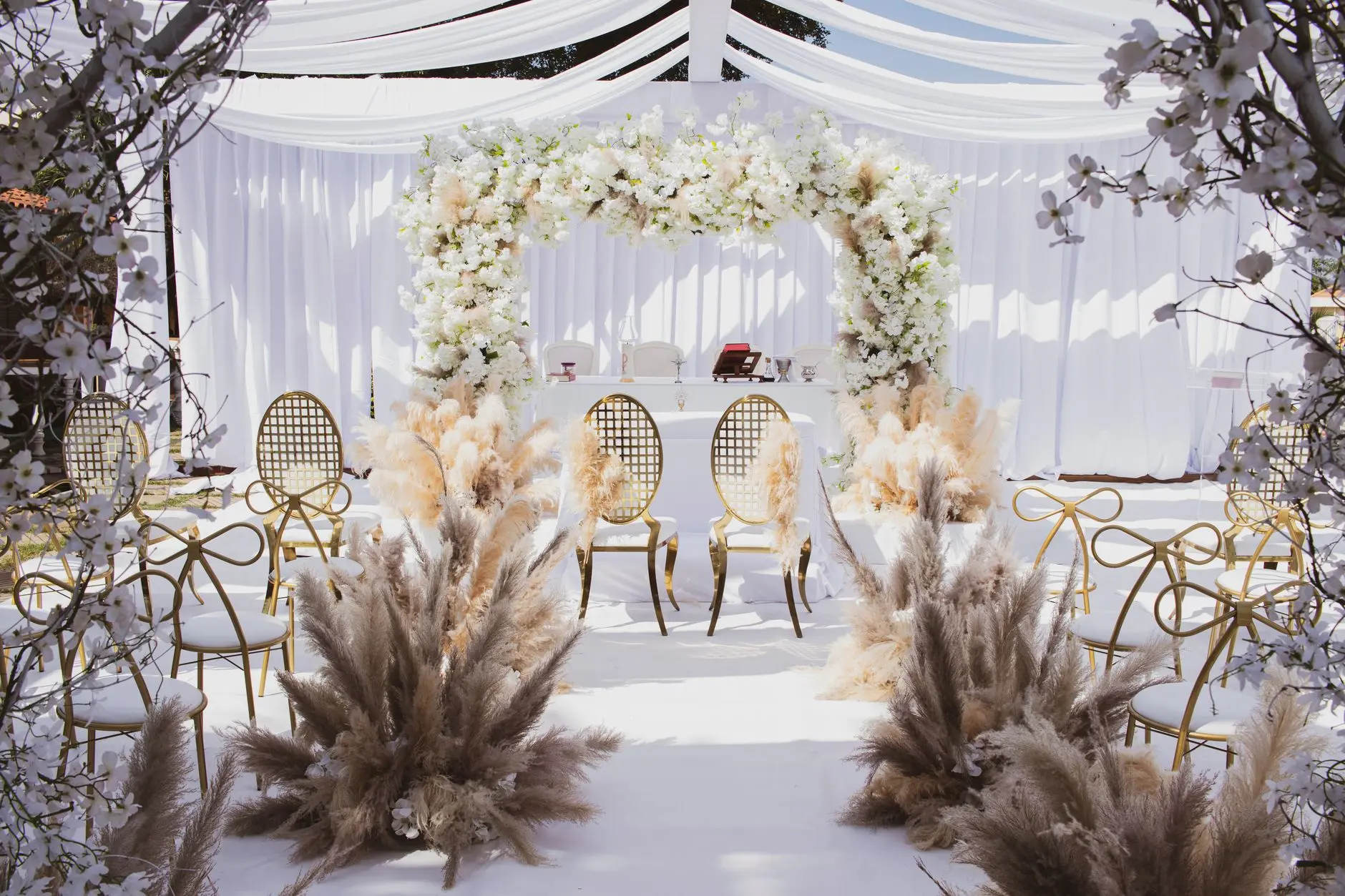
Filipino wedding decor usually needs to do two jobs at once: support the ceremony rites at the altar and set up a reception built for a long, lively program with speeches, the money dance and an open dance floor. A few rental pieces make both parts easier to style.
At the altar, the Gold Arch Backdrop gives the principal sponsors a clean focal point to stand around during the candle, veil and cord rites, and it styles well with florals or draping to match the couple's palette. A set of White Taper Candle Holder (Set of 3) works well for the candle ceremony itself, with its graduated heights giving the unity candle moment some visual structure at the front of the aisle. An Elegant White Wooden Display Plinth, 36" gives the arras coins, the cord or the unity candle a dedicated surface at the altar, so sponsors do not have to hold everything throughout the service.
At the reception, an Ivory Velvet Scalloped Loveseat makes a comfortable, photogenic spot for the couple during speeches and the money dance line, so guests have a clear place to approach them. For collecting cash gifts and cards through the evening, a Gold Glass Card Box with its secure heart-shaped lock keeps contributions organized without asking a sponsor to carry cash around all night. OWC Decor's rental catalogue covers everything from ceremony backdrops to reception linens, which makes it straightforward for a planner or a family member coordinating the day to book altar and reception pieces together. Couples building out a fuller tablescape around these pieces may also want to look at the full collection for linens, candle holders and signage that match the rest of the day.
Families planning a wedding that blends Filipino customs with a partner's own heritage may find it useful to read about cross-cultural wedding styling in BC, and those also marking a daughter's eighteenth birthday may want the companion guide to the Filipino debut, another milestone built around sponsors and a formal program.
Frequently Asked Questions
Is the pamamanhikan still required before a wedding?
No. Most couples today are already engaged before any formal visit happens, so the pamamanhikan has shifted from a marriage negotiation into a planning and blessing visit between families. Some families in BC combine it with an engagement gathering rather than holding it as a separate, formal event.
How many principal sponsors does a Filipino wedding need?
There is no fixed number, and family size and venue capacity usually decide it. Some couples choose three or four pairs to handle the candle, veil, cord and arras rites specifically, while others invite ten or more pairs as a sign of respect to extended family and close friends.
What is the difference between the veil and the cord ceremony?
The veil is a single piece of white fabric placed over the bride's head and the groom's shoulders to symbolize them being clothed as one. The cord, draped over both of them afterward in a figure-eight shape, represents an unbreakable, everlasting bond, and the two rites are usually performed back to back by different sponsor pairs.
Do families outside the Catholic faith still use these rites?
These customs grew out of Catholic wedding Mass practice. Families from other faiths or denominations often adapt the candle, veil, cord and arras rites to their own ceremony format, or set aside the ones tied most closely to that liturgy while keeping the pamamanhikan and principal sponsor tradition, since those rest on family custom and not religious requirement.
How much money is typical for the money dance?
There is no set amount, and it varies by relationship and by family. Guests generally give what feels appropriate for their closeness to the couple, and the gesture of dancing and contributing matters more than the exact sum pinned or handed over.
Can a Filipino-Canadian wedding fit all these traditions into one day in BC?
Yes, and most families do. The ceremony rites take only a few extra minutes within a standard service, and the money dance fits into a normal reception program, so couples can keep the full set of traditions without needing a multi-day event.
Sources and Further Reading
- Encyclopaedia Britannica: Philippines, Cultural Life
- National Commission for Culture and the Arts (Philippines)
- Statistics Canada: Filipino Canadians census profile data
- Fenella Cannell, Power and Intimacy in the Christian Philippines (Cambridge University Press)