Korean Wedding Traditions: The Pyebaek and What Couples Keep
What pyebaek, hanbok and the modern Korean wedding hall involve, and how Korean-Canadian couples in British Columbia set up a pyebaek table today.

Mei-Lin Chen
East Asian Weddings Editor
11 min read
Korean wedding traditions today usually mean two ceremonies in one day: a Western-style wedding with a white gown and a tuxedo, followed by pyebaek, a shorter family ritual in hanbok where the newlyweds bow to the groom's parents and receive blessings, dates and chestnuts tossed into the bride's skirt. For Korean-Canadian families in Metro Vancouver, the Fraser Valley and the Okanagan, this combination has to be adapted without the large multi-hall wedding centres common in Seoul, which means couples build their own version of the pyebaek table at a banquet hall, hotel room or family home.
This guide walks through what pyebaek is, what each part of it means, how hanbok fits into the day, how the modern Korean wedding hall format works, and what a pyebaek table setup looks like for a family hosting in British Columbia. Practices vary by region, generation and how religious or secular a family is. Where there is real variation, this guide explains the differences plainly.
What is pyebaek?
Pyebaek (폐백) is a Korean family ceremony held after the main wedding ceremony, in which the bride and groom bow formally to the groom's parents and sometimes other senior relatives, and receive their blessing for the marriage. It was historically performed at the groom's family home a few days after the wedding, as the bride's formal introduction to her new family. In Korea and across the Korean diaspora today, pyebaek is almost always folded into the wedding day itself, usually right after the main ceremony and before the reception begins.
The ceremony centres on a low table set with specific foods, most importantly dried jujubes (dates) and chestnuts, and a folding screen or embroidered cloth behind it. Only close family and sometimes the officiant or photographer are present, which makes pyebaek feel distinct from the larger reception: quieter, more intimate and clearly rooted in the groom's side of the family hosting the bride into it.
What happens during the pyebaek, step by step
Pyebaek follows a fairly consistent sequence, though families adjust small details:
- The couple changes into hanbok. After the main ceremony, the bride and groom typically change out of Western wedding attire into hanbok for this portion of the day.
- The parents are seated at the pyebaek table. The groom's parents sit facing the couple, with the father on a raised cushion and the mother beside him, following the traditional seating order.
- The couple bows. The bride and groom perform deep, formal bows (keun jeol) to the groom's parents, sometimes with the bride's own parents also present depending on the family.
- The parents offer words and a drink. Parents may share advice for the marriage and offer a small cup of wine or tea as part of the blessing.
- The jujube and chestnut toss. The parents throw dried jujubes and chestnuts toward the bride, who catches them in her skirt (chima), often with the groom's help holding the fabric.
- The couple bows again to close the ceremony, and photos are taken around the table before everyone moves to the reception.
The jujube and chestnut toss is the part most guests remember. Chestnuts are traditionally associated with sons and jujubes with daughters, and the number the bride catches is taken as a playful prediction of how many children the couple will have. Most families today treat this as a warm, photographable tradition and do not read much into the literal forecast. Some couples catch a handful simply for luck, without counting by gender.
What goes on a pyebaek table?
A traditional pyebaek table is lower than a standard dining table and set with a specific, recognizable group of items.
Core elements
- Dried jujubes and chestnuts, arranged in a tall, carefully stacked mound at the centre, since these are what get tossed to the bride.
- A whole cooked chicken or pheasant, sometimes dressed with red and green peppers in the mouth, representing fertility and a long marriage. Some modern families skip this element or substitute a simpler dish.
- Pine nuts and dried persimmons, used in smaller side arrangements alongside the main jujube and chestnut display.
- A folding screen (pyebaek-bo or a decorative backdrop) placed behind the table, traditionally embroidered with cranes, phoenixes or peonies symbolizing a long and prosperous union.
- Floor cushions for the parents to sit on, since pyebaek is traditionally performed at floor height rather than at a standing table.
Families hosting pyebaek in BC generally order the jujubes, chestnuts and other ceremonial foods from a Korean or Asian grocery ahead of the wedding, since these are not standard catering items at most banquet halls.
What is hanbok and who wears it for the wedding?
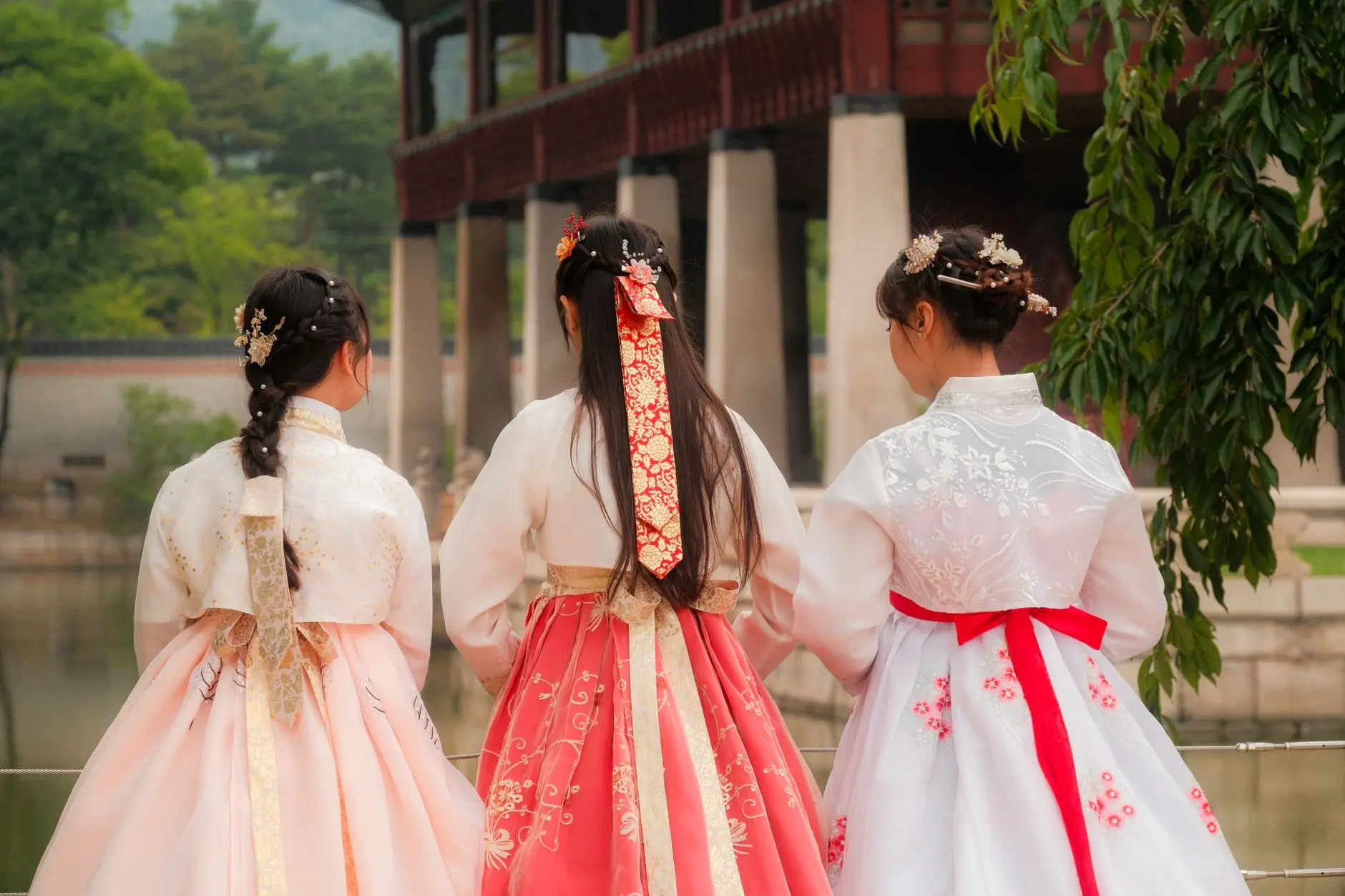
Hanbok is the traditional Korean dress, worn by both the bride and groom specifically for the pyebaek portion of the day and often by close family as well. For women, hanbok consists of a short wrap top (jeogori) and a high-waisted, full skirt (chima), usually in bright, contrasting colours like jade green with coral pink, or deep red with gold accents for a wedding version. For men, the groom's hanbok pairs a jeogori with wide trousers called baji and a long outer coat.
Wedding hanbok tends to be more elaborate than everyday or holiday hanbok, with embroidered details, richer silk and sometimes a short vest or jacket layered on top. Some brides also wear a hwal-ot, a traditional royal-style ceremonial robe, for photos, though this is closer to a styling choice today than a standard requirement. Parents attending the pyebaek often wear hanbok as well, in more muted or coordinated tones, which is part of what makes the pyebaek table photographs look so cohesive.
Most couples in BC rent hanbok, since it is worn for a single afternoon and specialty rental is more practical than ordering custom pieces from Korea. Families without a local source sometimes order online in advance or bring hanbok back from a trip, so this is worth arranging months ahead of the wedding date.
What does a modern Korean wedding hall ceremony look like?
In South Korea, most weddings happen at dedicated wedding halls built to run several ceremonies back to back on a single day, each lasting around 30 to 45 minutes. The format is efficient and fairly standardized: guests arrive, sign a guestbook and leave a cash gift, the ceremony itself runs quickly with a hired officiant (sometimes a family friend or respected elder rather than clergy), and the couple changes and moves straight into a buffet-style banquet, often in a different room from the ceremony itself.
This hall format does not exist in BC the way it does in Seoul, so Korean-Canadian couples adapt the spirit of the format to their own venues. Many book a hotel ballroom or banquet hall for the full sequence instead: ceremony, pyebaek in a smaller side room or at the edge of the reception space, then the main reception. Some couples choose to hold pyebaek privately at a parent's home earlier in the day or even the week before, which is closer to how the ceremony was traditionally timed, then join the public ceremony and reception afterward.
How do Korean-Canadian couples set up a pyebaek table in BC?
Since there is no standard wedding hall vendor supplying a pyebaek setup locally, most families source and assemble the table themselves with help from relatives who have done it before. A workable approach looks like this:
- Borrow or buy a low table and dress it with a cloth, since the traditional floor-height format works well in a hotel suite or home living room, but a slightly raised table also works at a banquet hall if floor seating is not practical for the parents.
- Order jujubes, chestnuts, pine nuts and dried persimmons from a Korean grocery, usually a few days ahead so the fruit is fresh and the chestnut mound can be stacked the morning of the wedding.
- Bring or rent a decorative screen or backdrop to stand behind the table, since the visual weight of pyebaek photos comes largely from what is behind the couple and parents, not just the table itself.
- Set up floor cushions for the parents and confirm ahead of time who else is included, since some families invite grandparents or the bride's parents into the pyebaek as well, which changes the seating and bow order.
- Schedule 20 to 30 minutes in the day-of timeline specifically for pyebaek, separate from the photographer's main coverage, since the room is usually smaller and the group is intentionally limited to close family.
Because pyebaek is a quieter, smaller moment than the ceremony or reception, many families find that a simple, well-lit backdrop and a tidy table read better in photos than an elaborate build, which keeps the setup manageable even for couples coordinating it without a dedicated planner.
Who pays for and plans the pyebaek?
Pyebaek is traditionally hosted by the groom's family, since it is the ceremony that formally welcomes the bride into that family. In practice today, costs for the hanbok rental, the pyebaek foods and any decor are often split between both families or absorbed into the overall wedding budget the couple is managing together, especially when the pyebaek happens at the same venue as the rest of the day. Couples planning a full day that includes a pyebaek alongside a Western-style ceremony and reception may find it useful to see how other multi-part cultural wedding days get budgeted, covered in wedding budgets.
Decor and styling for a pyebaek ceremony
The pyebaek table does not need a large footprint, but it benefits from a clear backdrop, a stable surface at the right height, and warm, low lighting that flatters the hanbok colours and the jujube and chestnut display. A few rental pieces translate well into this setup.
The Boho Wooden Divider is a four-panel folding screen with carved detailing and an antiqued finish, which stands in nicely for the traditional embroidered screen placed behind the pyebaek table and parents. For raising the jujube, chestnut and persimmon display so it reads clearly in photographs, the Elegant White Wooden Display Plinth, 18" gives a clean, low platform that keeps the fruit arrangement at the right scale next to a floor-height table. A White Display Wall with Shelves works well just outside the pyebaek room for displaying any gifts or envelopes guests bring for the couple. For warmth without relying on an open flame near fabric and hanbok, the Luxe Cordless LED Table Lamp adds soft ambient light to the table setting. A small arrangement from the Faux Floral Centrepiece line, available in a white ceramic or gold bowl, can sit at the edge of the table without competing with the jujube and chestnut mound. OWC Decor, based in Fort Langley and serving Metro Vancouver, the Fraser Valley and the Okanagan, carries these pieces for families assembling a pyebaek setup alongside their main reception decor. Browse the full collection for additional pieces to round out the room.
Couples blending Korean pyebaek with other family traditions in one wedding weekend may also find the guide to cross-cultural wedding styling useful for thinking through how to sequence different ceremonies across one day without the decor feeling disconnected.
Frequently Asked Questions
Is pyebaek only for the groom's family?
Traditionally yes, since pyebaek began as the bride's formal introduction to her husband's parents and extended family. Many couples today widen the guest list to include the bride's parents and both sets of grandparents. This reflects a generational shift in practice, and families today treat the choice as optional.
Do both the bride and groom wear hanbok, or just the bride?
Both wear hanbok for pyebaek. The bride's hanbok is usually more elaborate, in brighter or richer colours, while the groom's hanbok is simpler in cut but still coordinated with hers.
How many jujubes and chestnuts does the bride need to catch?
There is no required number. The toss is treated as a lighthearted blessing, though some families enjoy keeping track as part of the fun.
Can pyebaek happen the day after the wedding instead of the same day?
Yes, and historically that was closer to the original timing. Most couples now combine it into the wedding day itself for practical reasons, since out-of-town guests and rented venues make a separate day harder to coordinate.
Does every Korean wedding in BC include a pyebaek?
No. Some couples, particularly those marrying outside a Korean community or blending traditions with a partner from a different background, choose to skip it or keep a simplified version with just the bow and no formal table. It depends entirely on the family's own practice.
What is the difference between pyebaek and the main wedding ceremony?
The main ceremony is the public, larger event, often Western in style with a white dress and formal vows, attended by the full guest list. Pyebaek is a smaller, family-only ritual focused on the bride bowing to the groom's parents, usually held right afterward in a separate room.
Where can couples rent hanbok in BC?
Specialty hanbok rental is available through Korean community businesses in areas with larger Korean-Canadian populations, including parts of Metro Vancouver. Booking well ahead of the wedding date is recommended since inventory and sizing can be limited compared to Western formalwear rental.
Sources and Further Reading
- Encyclopaedia Britannica: South Korea, Cultural Life
- Statistics Canada: Ethnic and Cultural Origins of the Canadian Population
- Pak, Chŏng-suk, Korean Traditional Wedding Customs (National Folk Museum of Korea Press)